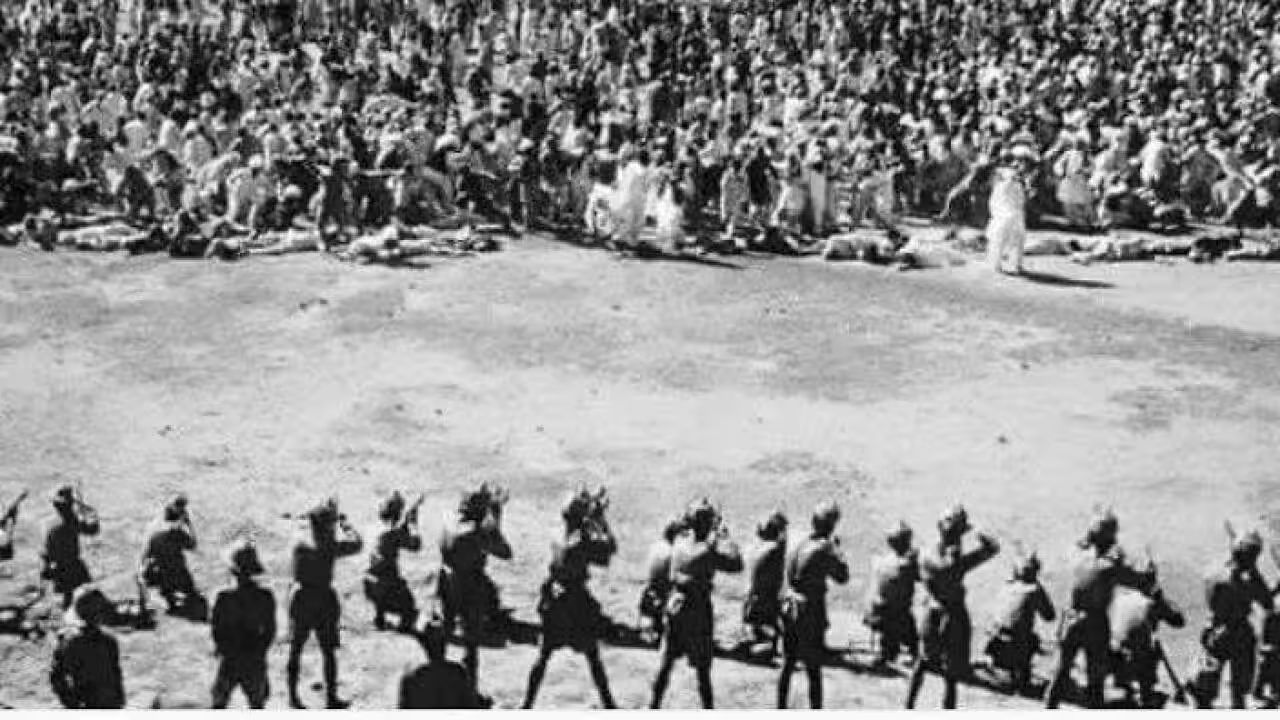
It was the month of August, 1948. The people of Pakistan were preparing to celebrate their first independence anniversary, and it had been decided at the state level that it would be celebrated on August 14, 1948.
However, just two days before the country’s first independence anniversary, news arrived from the village of Babrra in the Khyber Pakhtunkhwa province of Pakistan (formerly the North-West Frontier Province, or NWFP) that more than 600 Khudai Khidmatgars had been killed in an operation ordered by the imposed Chief Minister of the province, Khan Abdul Qayyum Khan.
For context, Khudai Khidmatgar (which translates to ‘servants of God’) was a predominantly Pashtun, nonviolent resistance movement known for its activism against the British Raj in colonial India. They were also known as Surkh Posh or “Red Shirts“, and were originally a social reform organisation focusing on education and the elimination of blood feuds. However, it gradually became more political as its members were being targeted by the British Raj.
The protesters had gathered to demonstrate against the arrest of Khan Abdul Ghaffar Khan, famously known as Bacha Khan.
The massacre of peaceful protesters at Babrra, at the hands of the police and the Frontier Constabulary (FC) — a paramilitary force, was the first incident in Pakistan involving civilian killings and injuries, and remains one of the largest single-day civilian killings in the country’s history. And yet it is a pity that Pakistan has either remained oblivious to this past or has chosen to forget it.
As expected, the state obfuscated the truth: official figures claimed that 25 protestors were killed and around 40 injured. However, Khudai Khidmatgar sources maintain that anywhere from 150 to over 600 unarmed protestors lost their lives, over 1,200 were injured by direct gunfire, and hundreds more drowned in the Kabul River while trying to flee because all other exit routes had been sealed off by the police.
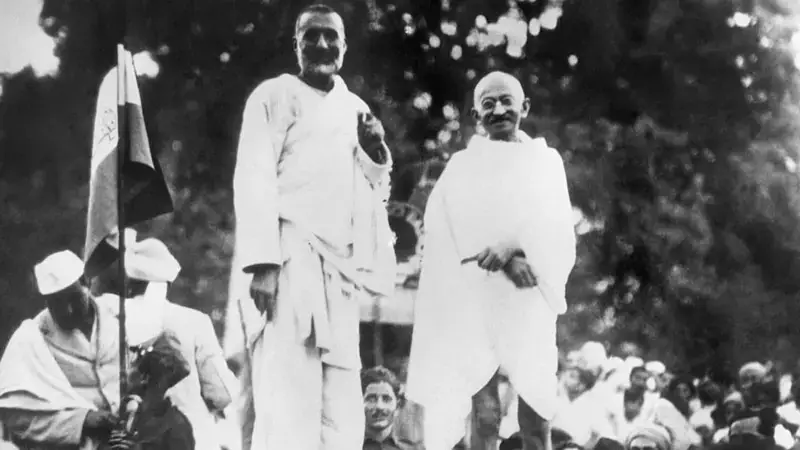
Background of the Babrra Massacre
In the 1937 elections, the Indian National Congress, allied with the Khudai Khidmatgar movement, emerged as the single largest bloc, winning 19 out of 50 seats. Initially, they refused to form the government because of a high-level party policy against the British-imposed Government of India Act. Consequently, the Governor of the NWFP appointed Sahibzada Abdul Qayyum as Chief Minister. However, once the central Congress leadership agreed to participate in regional governance, the NWFP opposition under Dr. Khan Sahib successfully passed a vote of no-confidence against Sahibzada Abdul Qayyum’s administration. Thus, Dr. Khan Sahib (brother of Bacha Khan) took over as Chief Minister.
In 1939, the Indian National Congress resigned from power in eight provinces to protest Viceroy Lord Linlithgow’s decision to draw India into World War II without consulting Indian leaders. Dr. Khan Sahib’s NWFP government was among them.
Following the end of World War II, the Khudai Khidmatgar once again formed the government in the NWFP.
In the provincial elections of 1946 in the erstwhile NWFP, the Congress (allied with Khudai Khitmatgar) won 19 Muslim seats and 11 non-Muslim seats (a total of 30 out of the 50 seats). Its ally, the Jamiat Ulema-e-Hind won a further two seats. The Muslim League won 17 Muslim seats and the Akalis won one seat. Therefore, Dr. Khan Sahib, who not only had a clear majority in the assembly, but had also won more Muslim seats than the Muslim League, formed the government.
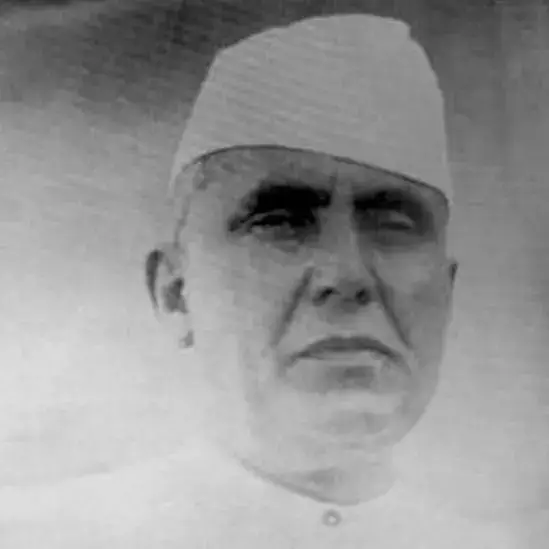
The Referendum for the Frontier Province
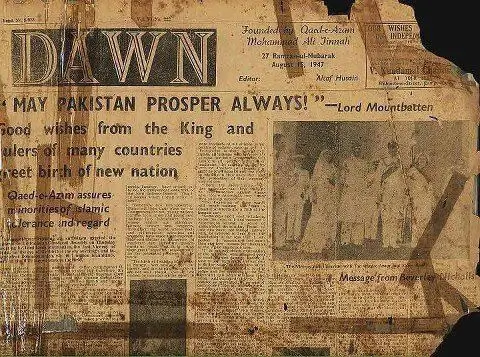
The announcement of the 3rd June Partition Plan created a political deadlock. The NWFP was a Muslim-majority province but was governed by a pro-India Congress ministry. To resolve whether the region would join India or Pakistan, Viceroy Lord Mountbatten ordered a public referendum, offering two options: join India or join Pakistan.
Bacha Khan demanded a third option on the ballot — an independent Pashtun state (“Pashtunistan”). When the British and the central Congress leadership rejected this demand, the Khudai Khidmatgar officially boycotted the referendum, instructing their followers not to vote.
As a result, the Muslim League won the referendum by default, and the NWFP became a part of Pakistan.
The Frontier Province in Post-independence Pakistan
At the time of Pakistan’s independence, Dr. Khan Sahib was the Chief Minister of the Frontier Province. However, just eight days later, on August 22, 1947, the Quaid-e-Azam dismissed his government, accusing him of “disloyalty to the country” for not attending Pakistan’s flag-hoisting ceremony on August 15, 1947.
It must be noted that Jinnah had earlier asked Lord Mountbatten to dismiss the Congress ministry in the NWFP before independence. And even though Mountbatten agreed, Westminster overruled him, arguing that neither the constitutional machinery of the province had broken down nor the Congress party lost its majority in the legislature; and hence, the ministry remained intact.
After independence, Jinnah instructed the governor, Sir George Cunningham, to dismiss the Congress ministry and replace it with a Muslim League one. Interestingly, Section 51(5)the legal clause under which the ministry was dismissed—was inserted by Mountbatten on Jinnah’s advice to bring the provincial governors firmly under the authority of the Governor-General.
Khan Abdul Qayyum Khan was subsequently imposed as the Chief Minister of the province.
Dr. Khan Sahib’s younger brother, Bacha Khan, held the principled position that since the Khudai Khidmatgars had been allies of the Congress, and the Congress had accepted the partition of India, it followed logically that the Khudai Khidmatgars accepted Pakistan too.
It was on this logical basis that Bacha Khan decided to join Pakistan’s Constituent Assembly rather than India’s.
Thereafter, the Khudai Khidmatgar became the primary target of the country’s new rulers. Despite the hostility, the Khudai Khidmatgars remained patient, pledged loyalty to the new state, and committed themselves to its service. And although they protested the undemocratic dismissal of Dr. Khan Sahib’s government, they created no difficulties for the new central or provincial governments.
Moreover, in March 1948, Bacha Khan actively participated in the sessions of the Constituent Assembly. There, while declaring his loyalty to Pakistan, he reiterated that his movement was constructive rather than destructive, and that the Khudai Khidmatgar was fundamentally a reformist, social movement, one the British had pushed toward political activity and alliance with the Congress.
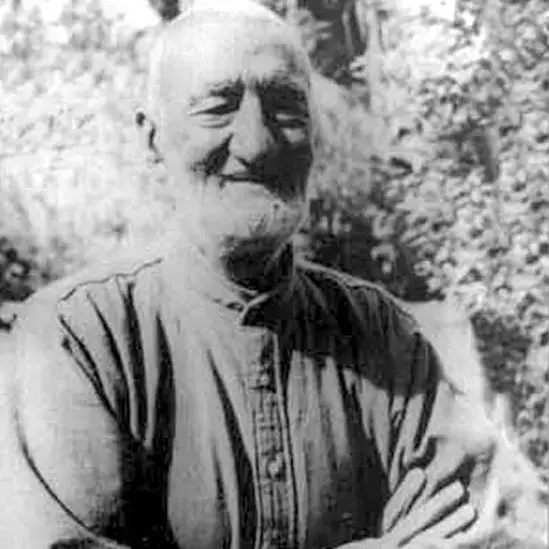
Prior to this, Pakistan’s founder, Muhammad Ali Jinnah, had invited Bacha Khan to dine with him, and the two spoke openly and candidly. There too, Bacha Khan had assured Jinnah of his loyalty to Pakistan, adding that since certain circles harboured doubts about him, he would refrain from active politics until those doubts were dispelled, confining his activities solely to his reform program.
Following this meeting, Bacha Khan recalled in an interview: “Quaid-e-Azam was completely satisfied by my straightforward remarks, which I had made with utmost honesty, and he bid me farewell affectionately while embracing me…”
In April, however, when Jinnah visited Peshawar, political opportunists whispered in his ear that Bacha Khan and his organisation’s members could not be trusted. It is even rumoured that they warned Jinnah that attending any function organised by the Khudai Khidmatgar could endanger his life.
Bacha Khan recounted: “Therefore, when I went to Quaid-e-Azam at the Government House with the invitation for him to attend an event organised by the Khudai Khidmatgars, Quaid-e-Azam expressed hesitation…”
Bacha Khan, who was striving for reconciliation, instead became a target of the government, and the imposed Chief Minister, Qayyum Khan, turned into an outright authoritarian, consumed with ambitions of retaliation.
On May 8, 1948, Bacha Khan attended a meeting of political workers in Karachi, where it was decided in principle to form a new political organization, the “People’s Party,” (distinct from the later PPP of the 1960s), to meet the need for a constitutional opposition. Among Bacha Khan’s associates in this effort were G.M. Syed and Abdul Samad Khan Achakzai. Bacha Khan was elected president of the new organisation, and G.M. Syed was elected general secretary.
The aims and objectives of this party included provincial autonomy, progressive social change with the support and consent of the people, and friendly cultural relations with all neighbouring countries, including India.
It was also decided that the Khudai Khidmatgar movement would retain its own separate identity, serving as a volunteer corps for the new political party and expanding across all provinces. To this end, Bacha Khan returned to the Frontier and began touring the province. However, within a month, on June 15, he was arrested along with his son Abdul Wali Khan and Qazi Ataullah Khan.
Abdul Samad Achakzai was also taken into custody, and G.M. Syed was expelled from Karachi. Thus the new political organisation, one that had begun working for national unity across the country through democratic process and the struggle for political freedoms, perished at the moment of its birth.
What followed, though, was beyond all expectations.
The Babrra Massacre
In July 1948, the Governor of the Frontier province, Sir Ambrose Dundas, promulgated an ordinance authorising the government to detain any person indefinitely without stating a reason. The ordinance also permitted the state to confiscate the properties of such detainees, who were also stripped of the right to challenge their arrests in any court. When the governor was criticised for such draconian laws, he defended himself by asserting that he was acting under orders from the governor-general.
Under the new law, the provincial government carried out mass arrests of political opponents across the province. Numerous individuals were arrested and had their property confiscated, including Bacha Khan, Dr. Khan Sahib, Qazi Ataullah, Arbab Abdul Ghafoor, and many others.
Though in truth, the targeted detention of Redshirt leaders had begun soon after partition, following the dismissal of Dr. Khan Sahib’s government on August 22, 1947.
Naturally, the detention of Bacha Khan and his associates provoked an intense reaction from the Khudai Khidmatgar. In late July 1948, Bacha Khan’s elder brother, Dr. Khan Sahib, announced that he would hold a public gathering against these detentions at Babrra, near Charsadda; shortly after this announcement, he too was arrested.
On August 5, 1948, the Divisional Magistrate of Charsadda imposed Section 144 in the area. Despite this, as Dr. Khan Sahib had announced, on August 12, 1948, unarmed protesters began moving from Charsadda to Babrra to protest the widespread arrests of Redshirt leaders and activists. The party had issued strict instructions to its workers not to bring so much as a stick — let alone arms — to the venue of the protest, as the Khudai Khidmatgar was a peaceful, non-violent movement that followed Gandhi’s philosophy of non-violence. An estimated 25,000 people were present at the protest venue.
To stop the demonstration, the provincial administration deployed a heavy contingent of police and paramilitary forces, and as soon as people assembled and speeches were about to be delivered, the police ordered them to disperse and immediately opened indiscriminate fire on the assembled congregation.
People struck by bullets began falling to the ground. It is said that some women of the village, horrified by this carnage, rushed out carrying the Holy Quran on their heads, crying and pleading for the firing to stop — but in vain.
More than 600 people were killed and about 1,500 critically wounded. Many drowned in the Kabul River as they tried to flee, since all other exit routes had been sealed off by the police. Most of the bodies were disposed of under highly mysterious circumstances, and the wounded were denied admission to hospitals and deprived of critical medical treatment.
The firing stopped only when the police ran out of ammunition.
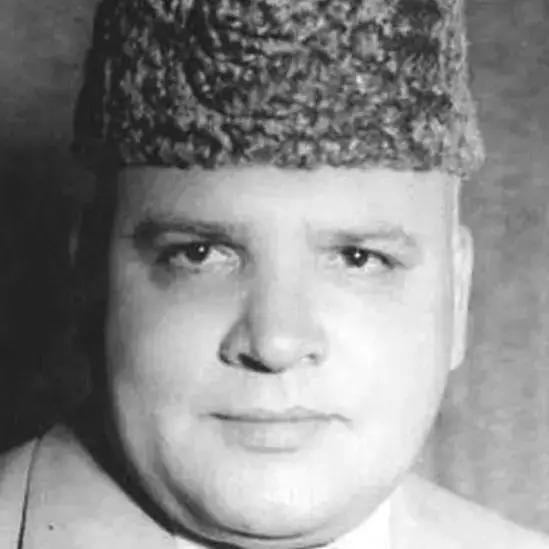
According to many accounts, after the massacre, Qayyum Khan delivered an inflammatory speech at Chowk Yadgar in Peshawar, declaring that he had “taught the Khudai Khidmatgars a lesson at Babrra that they will remember for the rest of their lives.”
And three weeks later, while speaking in the Provincial Assembly, Qayyum Khan boasted that had the police not run out of ammunition, not one man would have been spared:
I had imposed Section 144 at Babrra; when the people did not disperse, only then they were fired upon. They were fortunate that the police ran out of ammunition, otherwise not a single man would have left that place alive. This is not the British government; this is the government of the Muslim League, and the name of this government is Qayyum Khan. The Khudai Khidmatgars are traitors to the country. I will erase their existence.
He further claimed:
After the arrest of their leader Bacha Khan, the Red Shirts had planned to spread unrest across the entire province by launching a civil disobedience movement; they possessed unlicensed weapons and were bent on worsening the situation throughout the province. Had they succeeded in spreading disorder, the consequences would have been very dangerous.
Of course, Qayyum Khan could not produce a single piece of evidence to substantiate his claim that the Khudai Khidmatgar possessed weapons.
Only two days later after the massacre at Babbra, the nation celebrated its first anniversary of independence, while many households in the Frontier were mourning their dead.
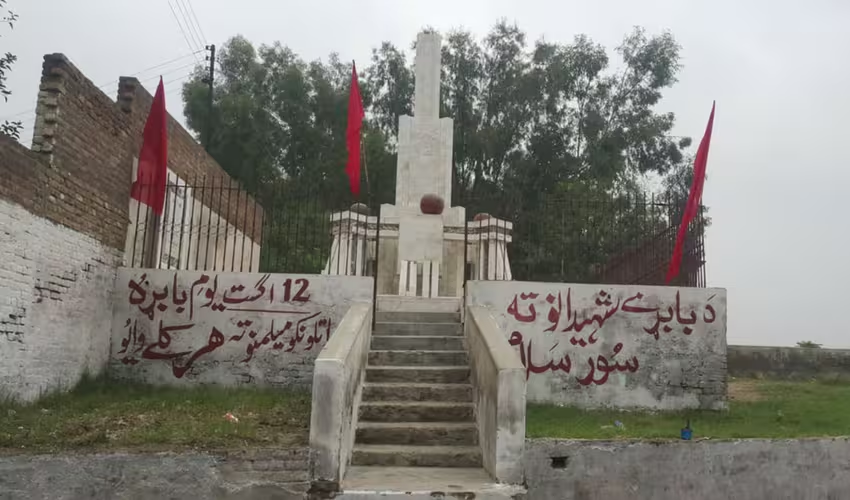
In the rest of Pakistan, most notably in Punjab, there weren’t many who condemned this atrocity. Instead, a considerable number of people praised this “iron man” of the Frontier, believing his action had eliminated the mischief of Pashtunistan once and for all. Others called Qayyum Khan an ideal ruler, arguing that governments in Pakistan’s other provinces should also be entrusted to such men, and that elements opposed to Islam and Pakistan should be crushed entirely.
Commenting on the Babrra incident, the daily Nawa-i-Waqt wrote in its editorial:
The Chief Minister of the NWFP, Khan Abdul Qayyum Khan, deserves congratulations for keeping a close watch on the traitors in the province. Those who accuse Qayyum Khan of terrorism and dictatorship are unaware of the true conditions in the NWFP; and if, despite knowing the situation, they continue to curse the Frontier Chief Minister, one must mourn either their wisdom or their intentions.
The editorial continued:
A thousand objections may be raised against Khan Abdul Qayyum Khan, but as far as taking action against traitors and rooting them out is concerned, we are compelled to pay tribute to him. We can say without hesitation that the Quaid-e-Azam and the Government of Pakistan hold the same view on this matter, and that Khan Abdul Qayyum Khan enjoys their full support. If Khan Abdul Qayyum Khan misuses his powers to crush his political opponents, we will strongly condemn it, but when he exercises sternness to crush national traitors, he deserves congratulations.
Following the massacre, the Khudai Khidmatgars demanded a judicial commission. However, no such commission was ever formed, and those responsible were never brought to justice. While mainstream Pakistani history extensively discusses tragedies like the Jallianwala Bagh massacre and Qissa Khwani Bazaar massacre, it remains abjectly silent on Babrra.
Pashtuns refer to this incident as the “Jallianwala Bagh of the Frontier,” and remember Khan Abdul Qayyum Khan as the “General Dyer of the Frontier.”
In July 1950, Huseyn Shaheed Suhrawardy, then-president of the All Pakistan Awami Muslim League (which later evolved into the Awami League) and later Prime Minister of Pakistan, spoke at a large gathering in Dhaka (then East Pakistan, present-day Bangladesh):
The barbarous massacre of the Red Shirts (Khudai Khidmatgars) committed at Charsadda in 1948 surpassed the Jallianwala Bagh massacre committed by the British in 1919.
It would not be out of place to mention here that at the time this tragedy at Babrra occurred, the Quaid-e-Azam was still alive, fighting the last battle of his life at Ziarat.